YOUR UTILITY RATES

Rising Rates

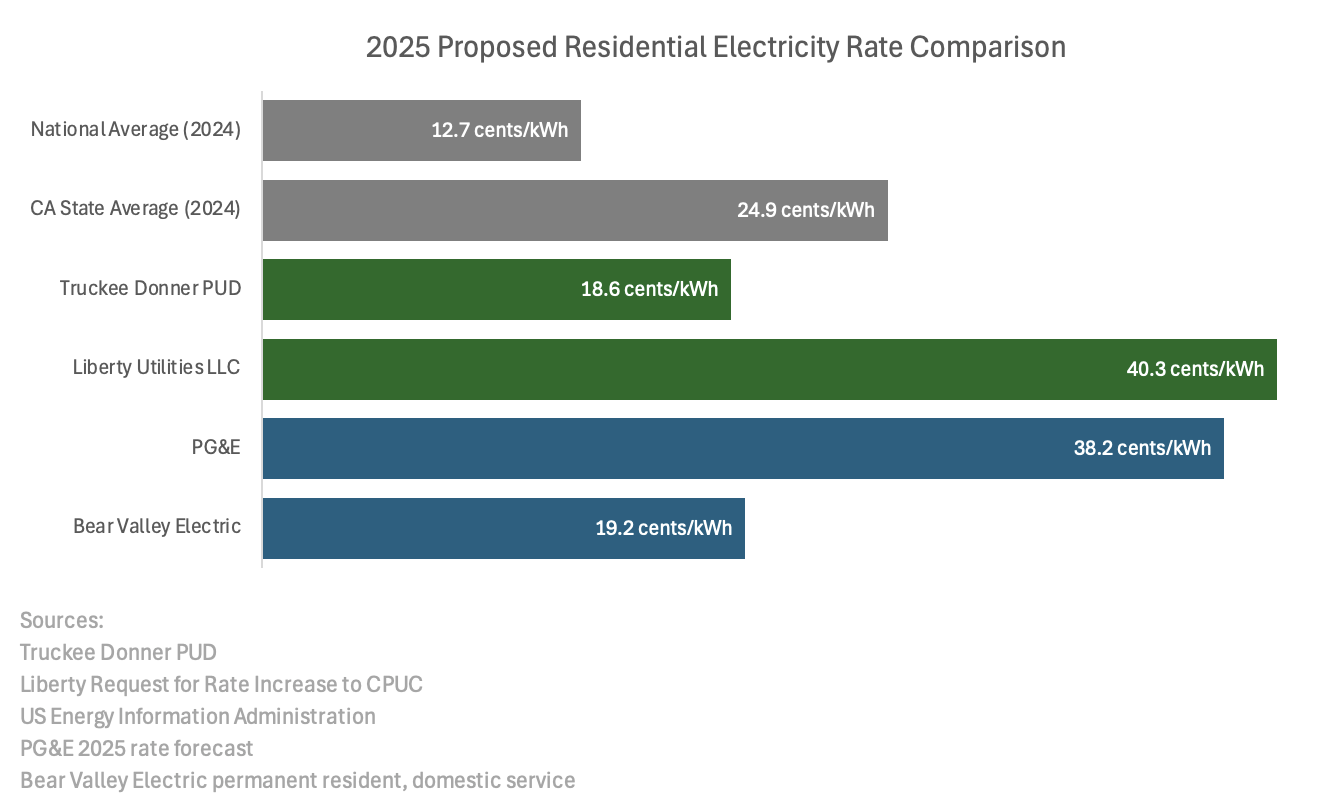
Liberty’s residential rate is over three times the national average, and almost twice the state average. Liberty Utilities is currently proposing another rate hike, stating a 23% increase for residential rates, more than a 100% increase since 2020 making our energy rates some of the highest in the nation.
DEDICATED ADVOCACY


TAHOE SPARK (the alliance for housing opportunities in energy supporting permanent affordable residential kilowatts) works closely with all relevant parties to find a path forward correcting past actions that shifted costs to the permanent residents and a reasonable approach forward assuring each user type pays their fair share.

We actively monitor and respond to emerging challenges as we gather additional information on utility rates to protect our community’s interests.

General Rate Case

All previous negotiations have taken place without any input from the permanent residents living the communities within Liberty Utilities’ service area, including many small rural communities with aging populations, lower wages, lack of access to jobs, and challenges related to affordable housing and rising energy costs. 

SPARK notes

WHAT YOU NEED TO KNOW

The California Public Utilities Commission (CPUC) is reviewing two major policy changes: a proposed residential demand fee that would charge residents based on how much electricity they use at one time, and Liberty Utilities’ plan to eliminate the long-standing rate class for non-permanent residences, which was originally created to reflect their different consumption patterns. Together, these changes would disproportionately raise costs for full-time residents while reducing accountability for vacation homes and seasonal visitors who drive peak demand and contribute to wildfire risk, the primary factors behind rising rates.

Peak Demand Shift


Liberty serves approximately 49,000 customers in California, and roughly 65% of homes in its service territory are second homes or short-term rentals. Yet the cost burden is increasingly placed on the 35% of households who live here full-time as a result of limited understanding of the region.

Wildfire Insurance Profiteering

Wildfire mitigations is the primary driver increasing our bills, but it is not the undergrounding of power lines or tree-trimming it is mostly insurance, increasing from $7.962M to $31.706M.


Paying for Inadequate Programs

The Public Purpose Program (PPP) surcharge on your bill subsidizes public initiatives. Unlike most Californians, Liberty Utilities customers who do not qualify for other state and federal assistance are not offered any financial relief programs when facing temporary hardship.

Climate Credit Theft


The California Climate Credit — meant to offset utility costs — was recently reduced in this region, redirecting funds to hotter, urban areas. That decision failed to consider the heating burden, wildfire exposure, and growing summer demand that define our energy use in the Sierra.

Liberty & NV Energy Agreement

The electricity will still be delivered through NV Energy’s transmission lines, but NV Energy will no longer be the wholesaler. Liberty says it expects to open a formal competitive bidding process this summer, in the search for a new electricity provider. The switch-over is expected to happen at the very end of 2027.

Increased Infrastructure

Liberty’s capital investment plan includes several large projects driven by tourism-related growth. These infrastructure investments are funded through general rate recovery, meaning permanent residents are paying high costs for grid expansions built to support seasonal and commercial users.

How To Participate

Use this Guided Letter to craft a comment letter to the California Public Utilities Commission and post your comment in less than 5 minutes.

OUR FUTURE IS UP TO US,
JOIN THE CONVERSATION

Scroll to Top